
Stage payments on a new Costa Blanca home only make sense when every euro is backed by a real bank guarantee or insurance bond. What to check before you transfer anything.
Buying Off-Plan on the Costa Blanca: Deposits, Bank Guarantees and Buyer Protections (2026)
Off-plan still attracts international buyers on the Costa Blanca — modern layouts, stronger energy performance, developer warranties, and often a cleaner finish than tired 1990s stock. The trade-off is obvious: you pay before the home fully exists.
That is fine when the paperwork is right. It is expensive when it is not. Spain has a long statutory tradition of protecting advance payments on housing (the lineage of Ley 57/1968, today applied through the Building Regulation framework as reformed by Ley 20/2015). In 2026 the courts are still reinforcing that banks and insurers cannot wriggle out of those duties with formal excuses.
This guide is for Moments Estates clients comparing off-plan units in places like Jávea, Moraira, Altea, Calpe, Benissa or Dénia — practical checks before reservation money leaves your account.
Why off-plan still makes sense
- Specification and energy ratings that match what today’s buyers (and future buyers) expect
- Structural and habitability warranties that resale stock rarely matches
- Tax route is usually IVA (10%) + AJD on new housing, which you should model against ITP on a comparable resale
- Staged cash flow during construction, if the payment schedule is clear
None of that replaces due diligence on the developer, the licence, and the guarantee on each payment.
How stage payments usually work
Exact percentages vary by developer and project. A common pattern looks roughly like:
- Reservation — modest holding deposit to take the unit off the market
- Private purchase contract — larger payment when you sign the contrato privado
- Construction milestones — further tranches tied to progress (foundations, structure, completion)
- Notary completion — final balance when the home is delivered with licences and you take title
Treat brochure schedules as marketing. Your lawyer should map every euro to a date, a trigger, and a named guarantee.
The legal shield in plain English
For qualifying housing sold off-plan, Spanish rules require developers who collect money before handover to:
- Put buyer funds in a special account (cuenta especial) used for that development’s construction costs
- Back those advances with an individual bank guarantee (aval bancario) or surety insurance (seguro de caución)
- Identify the guarantor/insurer and the special account in the contract
If the developer fails to start or finish properly, or cannot deliver with the required permits, the protected path is recovery of the advances plus statutory interest — typically against the guarantor/insurer once the developer does not refund.
Important nuances for foreign buyers:
- Protection is strongest when the property is treated as residential housing, not a hotel/commercial tourist suite scheme
- Guarantees should be in your name for the amounts you actually paid
- Pre-licence payments sit in a grey risk zone unless your contract adds clear extra cover — many lawyers advise paying little or nothing until the building licence (licencia de obras) is issued
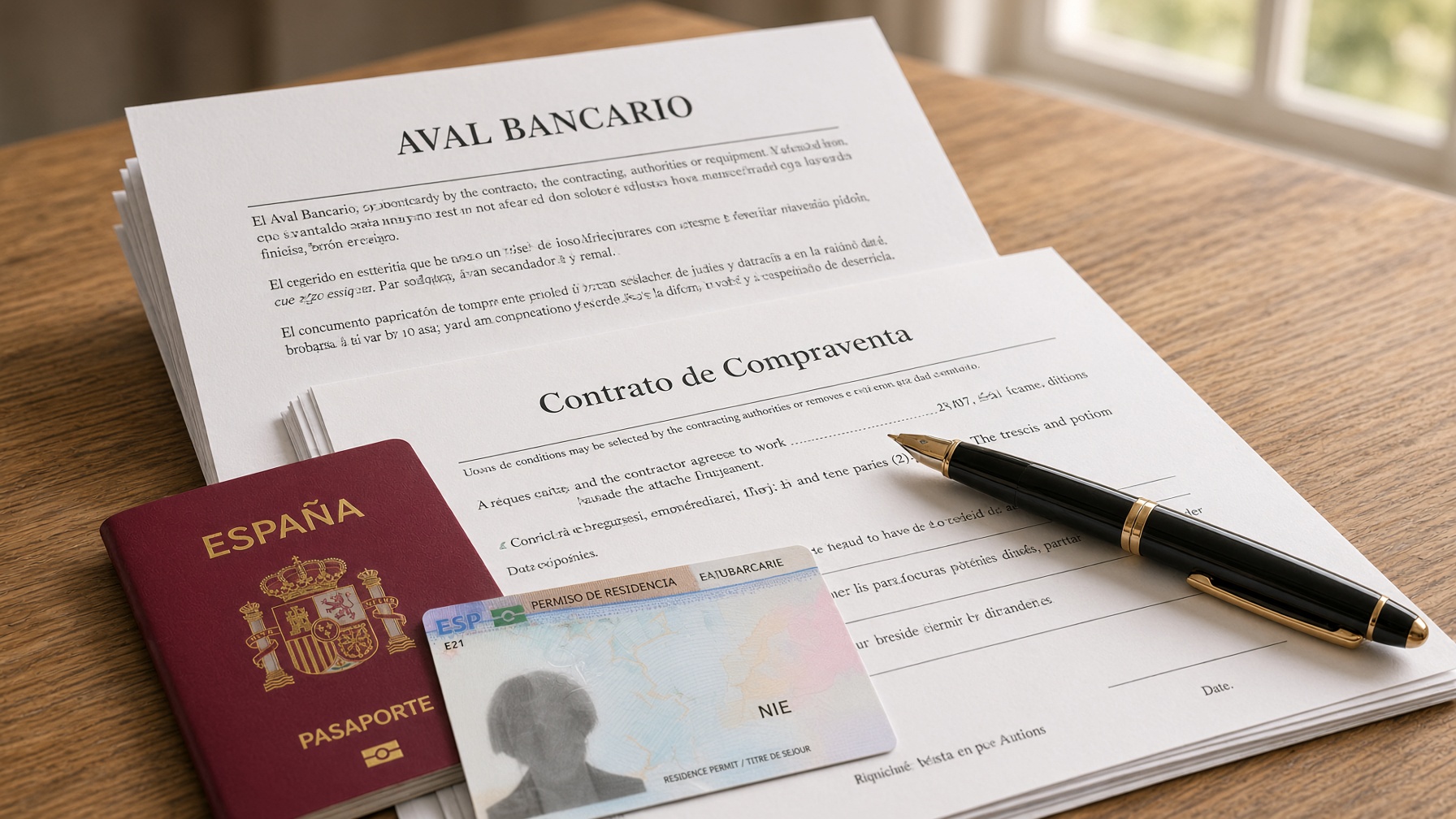
A glossy show flat is not a guarantee. The certificate, the special-account IBAN and the building licence are.
What you must see before you pay
Ask for — and have your lawyer verify — these items before each transfer:
- Building licence for the development (or a clear contractual regime if you are somehow paying earlier)
- Special account IBAN dedicated to the project — you pay only into that account
- Individual guarantee certificate (bank or authorised insurer) in your name, covering the payment you are about to make
- Contract clauses that name the guarantor/insurer and the special account
- Developer corporate identity, land title position, and planning consistency with what is marketed
- A payment schedule that matches construction reality, not optimism
Keep copies of every receipt, bank slip, email and certificate. Claims are documentary.
Red flags — walk or renegotiate
- “Pay into our company account / the agent’s account and we’ll sort the guarantee later”
- Only a vague “collective” cover with no individual certificate for your payments
- Pressure to pay large sums before the building licence exists
- Marketing as a home, but contracts that lock the unit into hotel operation or compulsory tourist management (Supreme Court reasoning in 2026 has underlined that some commercial/hotel purposes sit outside classic housing deposit protection)
- Guarantor that is not a recognisable bank or authorised insurer for this product
- Incomplete licence pack, shifting floor plans, or “trust us, it’s almost approved”
None of these are automatically fatal — but they should stop a wire until the structure is fixed.
If something goes wrong
Typical path (simplified):
- Document the breach (non-start, serious delay, failure to deliver with permits)
- Demand refund from the developer within the contractual/legal window
- If unpaid, claim against the aval or insurance bond
- Act early — guarantee rights can be time-sensitive; do not wait years hoping the crane returns
Spanish courts have repeatedly confirmed that this protection is public-order style buyer protection for qualifying housing advances. That is reassuring — it is not a reason to skip the paperwork on day one.
Buyer checklist for reservation day
- Independent Spanish lawyer (not the developer’s)
- Licence + special account + individual guarantee draft before meaningful money moves
- Full all-in model: stage payments + IVA/AJD + notary/registry + community fees after handover + waiting costs while you cannot use the home
- Compare against a turnkey resale in the same micro-location (see also our renovate-vs-new-build guide)
- Confirm what “completion” means: licences, utilities, community constitution, snagging process
- Ask how Moments Estates and your lawyer will verify each tranche before you pay it
Bottom line for Moments Estates clients
Buying off-plan on the Costa Blanca in 2026 can be a strong lifestyle and energy play — when every stage payment is individually guaranteed and paid into the special account. The profitable habit is boring: no licence, no IBAN, no named certificate, no transfer.
If you are shortlisting new-build or off-plan homes around Jávea, Moraira, Altea, Calpe, Benissa or Dénia, we can help you pressure-test the developer pack with your lawyer before reservation fever takes over.
Speak with our team when you want a shortlist that includes deposit protection checks — not only floor plans and sea views.
.jpeg)