
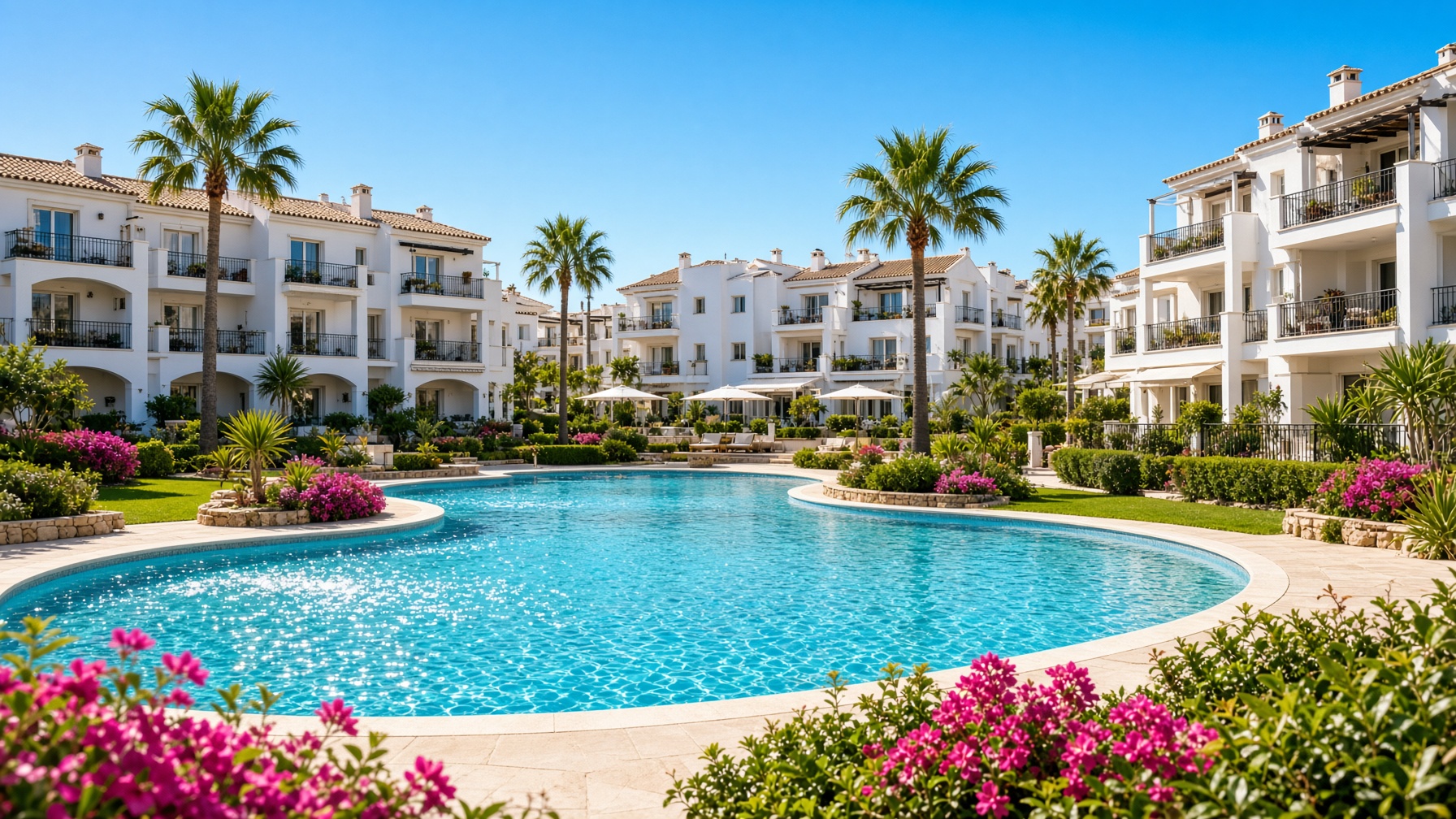
Shared pools and gardens look great in photos — until the monthly fee and a surprise derrama arrive. What to verify before you buy in a Costa Blanca urbanisation.
Community Fees on the Costa Blanca: What Buyers Must Check Before Buying in an Urbanisation (2026)
Many homes that international buyers fall for on the Costa Blanca — apartments in Calpe, townhouses in Dénia, villas inside gated estates near Jávea, Moraira or Altea Hills — sit inside a community of owners (comunidad de propietarios). The listing price is only half the ownership story. The other half is the community fee, the reserve fund, and whether a large bill for works is waiting around the corner.
In 2026, with buyers more selective and running costs under sharper scrutiny, reading the community file properly is as important as liking the view.
What community fees usually cover
Depending on the complex, the monthly or quarterly cuota typically helps pay for some mix of:
- Shared swimming pool (chemicals, cleaning, seasonal opening)
- Gardens, irrigation and outdoor lighting
- Lifts, stairwells and corridor cleaning
- Communal electricity and water for shared areas
- Building insurance for common elements
- The administrador de fincas (property manager)
- A reserve fund for future repairs (Spanish law expects communities to provision for this)
Larger “resort-style” urbanisations may also fund gyms, social clubs, security gates or 24-hour surveillance — which looks premium in photos and shows up every month in the fee.
Typical fee levels (indicative only)
Exact figures vary widely by town, age of buildings and amenity level. As a rough orientation on the Costa Blanca:
- Small apartment blocks with a modest pool and gardens: often lower tens of euros per month per unit
- Larger complexes with big pools, lifts and more services: commonly higher — sometimes well into the €60–€150/month band or more
- Villa urbanisations with shared pool/gardens: often mid-range fees, but check what is private vs shared
Treat portal “community fee” fields as a starting point, not gospel. Always ask for the current approved budget and recent accounts.
The paperwork that actually matters
Before you reserve or make an offer, ask the seller’s side (and your lawyer) for:
- Statutes and house rules — pets, holiday lets, works on terraces, pool hours, parking.
- Minutes of recent AGMs — what owners argued about and voted through.
- Last 2–3 years of accounts and the current year’s budget.
- Certificate of debt for the specific unit — unpaid community charges can follow the property.
- Pending or approved *derramas* (special assessments) — façade, roof, lifts, pool plant, accessibility works.
- Reserve fund balance — chronically empty funds are a warning light.
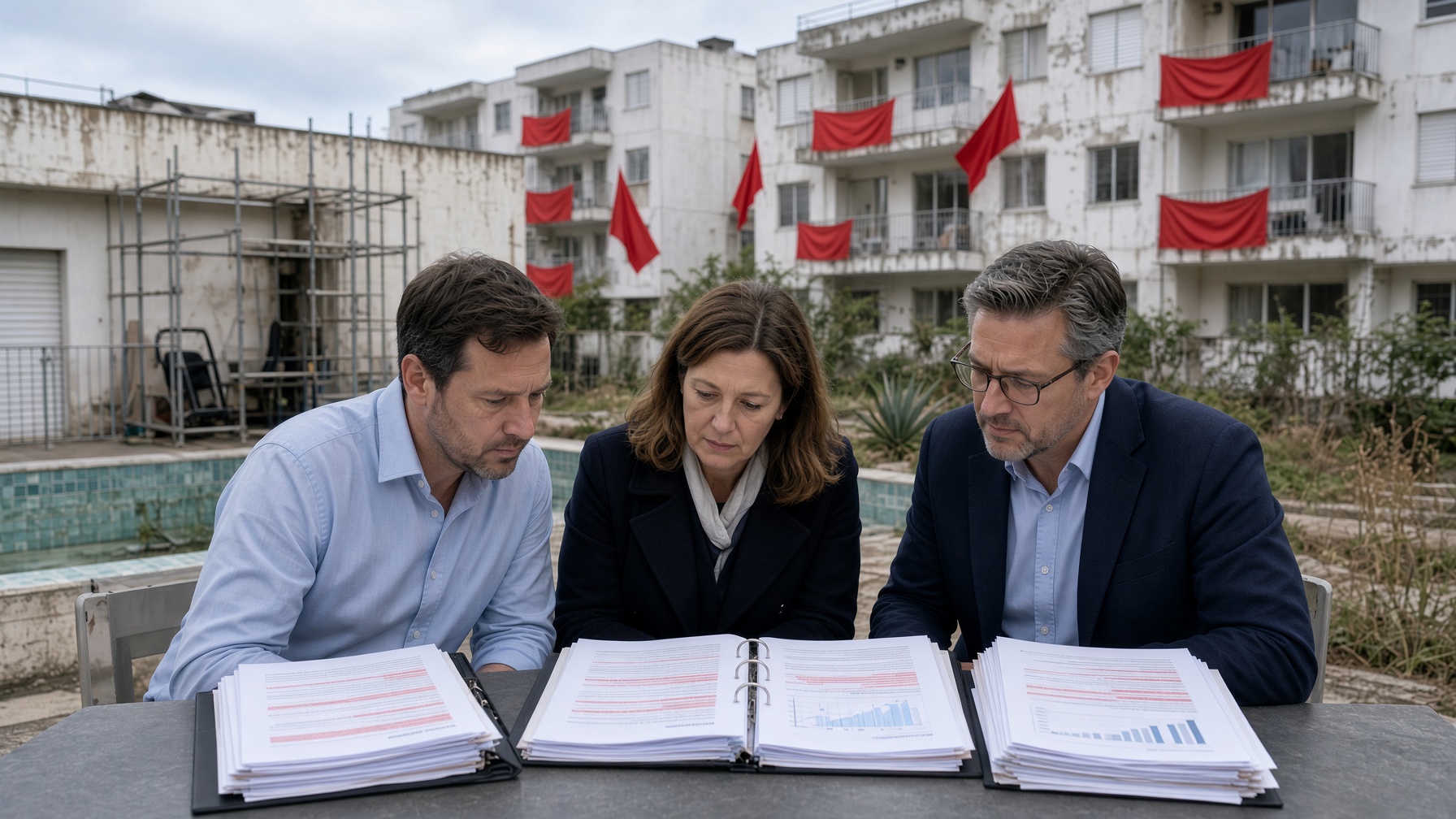
A beautiful shared pool is a lifestyle asset. An underfunded community with deferred façade and filtration works is a future invoice.
Red flags to take seriously
- Fees that look “too cheap” for the amenities shown
- No clear administrador or chaotic meeting minutes
- Big works discussed for years but never reserved for
- Restrictions that kill your plan (e.g. tourist rental bans if that was your model)
- Neighbour wars that dominate every AGM
- Sellers who cannot produce recent accounts quickly
None of these automatically kill a deal — but they should change your price, your contingency, or your walk-away.
Urbanisation vs standalone villa
Urbanisation / apartment community
- Predictable shared amenities; lower personal maintenance on pool and gardens
- Ongoing cuota + risk of derramas
- Rules constrain what you can do with the property
Standalone villa with no community
- No monthly community fee
- You alone fund pool, garden, boundary walls, private lane lighting
- More freedom — and more DIY or contractor cost
Neither is “better.” Match the structure to how you will actually use the home (full-time, winter only, holiday let).
Practical buyer checklist
- Get the full community pack before you emotionally commit.
- Have your lawyer interpret statutes and debt certificates — do not rely on the agent’s summary alone.
- Model purchase price + taxes + monthly fees + a buffer for derramas.
- Visit midweek and in low season if you can — empty gardens tell a different story than August photos.
- Ask who lives there year-round vs holiday owners; that often shapes how the community is run.
Bottom line for Moments Estates clients
On the Costa Blanca in 2026, buying “the apartment with the lovely pool” means buying into a mini-company of neighbours. The profitable move is boring: read the accounts, price the fee into your budget, and treat a surprise derrama as a negotiable risk — not a post-completion shock.
If you are shortlisting homes in Jávea, Moraira, Altea, Calpe, Benissa or Dénia urbanisations, we can help flag community questions early and work with your lawyer so the fee file is clear before you sign.
Speak with our team when you want a property shortlist that includes realistic ownership costs — not only the asking price.
.jpeg)